AGS Conference 2025
University of Oxford
The 93rd Conference of the Association for German Studies in the UK and Ireland took place at the University of Oxford from 1-3 September 2025.
The conference was held in person at St. John’s College, with some sessions also taking place at the Taylorian Institute Library.
Below are archived materials relating to the conference, including regristration details, the conference programme, book of abstracts and the original CfP, preceded by a video of the event featuring this year’s “President’s Guest”, Prof Natascha A. Kelly.
The President’s Guest at the AGS 2025 Conference was renowned writer, academic, artist and activist Prof. Natasha A. Kelly, founding Director of the Institute for Black German Arts and Culture and author of Schwarz, Deutsch. Weiblich (2023)
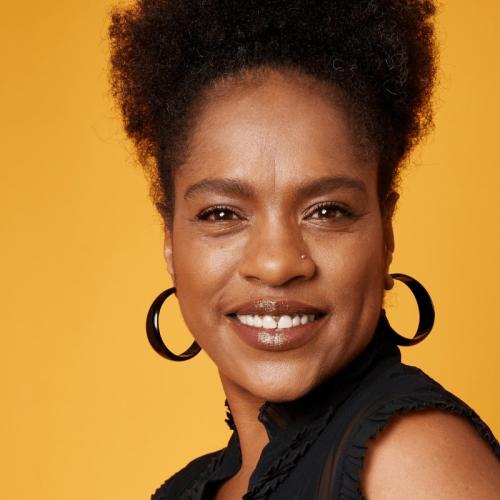
Natasha A. Kelly speaking about Black German identity and culture in conversation with Dr Kirstin Gwyer at the AGS 2025 conference.
ARCHIVED MATERIALS
Registration for the conference can be made via an Oxford University online store: https://www.oxforduniversitystores.co.uk/conferences-and-events/modern-languages/events/ags-german-in-the-world-conference
Please note: If you have not already registered an account on the University Online Store, you will need to register an account in order to make a booking. Alternatively, login as usual.
Since non-member conference fees are higher than membership rates, it is hoped all delegates will join the association, even if only for the year. Membership plans can be found here: https://ags.ac.uk/subscription-plan/. Due to a technical issue, it is not currently possible to become a member online. If you would like to become a member please contact the Association Secretary, Dr Stephan Ehrig ().
All food at the conference will be vegetarian. Please inform us of any allergies or further dietary requirements at booking stage.
Accommodation is available at St. John’s College, and will be on a first come, first served basis. Bookings can be made here. Queries about accommodation should be sent to: . Beyond the conference accommodation, hotels are expensive in Oxford in the summer. Details of alternatives can be found on the Oxford University conference page linked to above and again here.
Conference Committee: Dr Ian Ellison, Prof Henrike Lähnemann, Prof Karen Leeder, Prof Bernhard Malkmus, Prof Barry Murnane, Dr Joanna Neilly
Queries about the conference to:
Here is the conference programme and the book of abstracts:
PANELS
LEAD PANEL: GERMAN IN THE WORLD
Convenors:
From medieval myth to nineteenth-century opera to Hollywood adaptations and beyond, German culture has historically been at the centre of making and remaking the world.
The transfer and transformation of Germanic cultures into new contexts and medias for contemporary audiences is attracting new research (e.g. Ehrig, Schaper and Ward, 2023) but this phenomenon has also been historicised to show the multi-directional exchange of ideas and the literal movement across the world of German books and cultural objects, as well as German efforts to establish a global presence well before the twentieth century (Blackbourn, 2023; Hodkinson and Schofield, 2020; Tautz, 2018; Mani, 2016). Meanwhile questions of global significance, for example decolonisation and the repatriation of looted objects, have impacted cultural policies in Germany, as the recent decision (2022) to repatriate cultural artefacts from German museums powerfully illustrates.
Owing to their geographical position at the crossroads of hegemonial power struggles, their histories of accelerated modernisation, and their scientific and philosophical traditions, German-speaking countries have also made significant contributions to conceptualising human-nature relations that have become ever more prevalent in an age of multiple ecological crises that is shaped by the bifurcation of an anthropogenic ‘globe’ and a biospheric ‘planet’ (Spivak 1997, 2015). Environmental humanities therefore also provide a key strand in our conception of ‘Germany in the World’.
This 2025 Lead Panel recognises the vast significance for global cultures of German intellectual, literary, performance, and musical traditions, but also seeks to place German cultures in a global context by acknowledging their indebtedness to influences from beyond their borders as well as to multilingualism. The now discontinued Chamisso Prize is a salient example, while Thurman’s 2021 study reveals how the public reception of the cherished Austrian and German musical canon was transformed when performed by singers of African descent in German concert halls.
What are the material, social, cultural, and environmental impacts of German languages and cultures within and beyond Europe? How do such traditions encourage, amplify, or alternatively marginalise or occlude diverse voices and artistic practices? The conference theme seeks actively to locate German on the global stage: examining how German culture is received globally; responds to global questions; and is itself inflected by global culture and language.
Thematic areas might include:
German traditions of philosophy of technology and Technikkritik
SPEAKERS OF ‘MINORITY GERMAN’ IN THE (GERMAN-SPEAKING) WORLD
Convenor: Nadine Buchmann (Oxford):
The reception and reworking of German literature across borders and times
The reception of other cultures in German
Global networking; the literary market
The medieval and early modern worlds and their afterlives
Language development; cross-linguistic influences
Luther, Protestantism, and Globalisation
Interfaith dialogue
Migration, exile and post-migratory cultures
Exophone Literature
Modes of cultural assimilation and exclusion
Performance
Translation
Creative Multilingualism
Empire, colonialism, decolonising
The long history of conceptualising human relations to the world within German intellectual history: cosmos, nature, globe, biosphere, planet
German traditions of philosophy of science and Wissenschaftskritik
This panel invites contributions exploring the role of ‘Minority German’ speakers – such as those from Switzerland, Belgium, South Tyrol, and beyond – within the broader German-speaking world. We welcome papers that examine how these speakers navigate and shape their identity as German speakers without being Germans, whether as language professionals, writers, translators, educators, or cultural mediators. Topics might include the cultural and linguistic contributions of minority German communities, their unique perspectives on language pedagogy or translation, and their influence on German-language literature or media. We encourage submissions that engage with questions of belonging, identity, and linguistic diversity, as well as interdisciplinary approaches. Contributions from early-career scholars and those offering innovative or comparative perspectives are warmly invited.
INSECT LITERATURES
Co-convenors: Alice Christensen (University of Reading), Ina Linge (University of Exeter): and
If German culture has historically been at the centre of making and remaking the world, as the lead panel claims, whose world is it making and remaking? In this panel, we invite speakers to reflect on the relationship between German culture and the (Um)Welt of non-human animals, in particular those that are often forgotten or neglected, despite their invaluable contribution to the biodiversity of our ecosystem, and their centrality to the history of global empires: bugs and their kin. We invite contributions from scholars across career-stages to present on the role of insects and other critters in German-language literature and visual culture from across periods, with the aim to explore the entanglement of human and non-human cultures and worlds.
BLACK LITERATURE AND CULTURE IN GERMAN
Convenor: Kirstin Gwyer (Oxford):
This panel invites papers on any aspect of Black German literature, film and visual culture, and theatre and performance (including spoken-word, dance, and music). Areas of consideration could include, but are not limited to: the shaping of a distinct Afro-German voice and memory; intersections between Black German identity and African diasporic history, (German) colonialism, National Socialism, or the GDR; the evolving field of German-language Afrofuturism. We particularly welcome submissions on Black German cultural production that resists reductive representation through its contribution to gender, feminist, and queer studies, neurodiversity and disability studies, or environmental studies and posthumanism.
GERMANOPHONE CULTURE IN (HABSBURG) CENTRAL EUROPE: ALTERNATIVE VOICES OF COMMUNITY
Convenor: Martin Lindner (Oxford):
Since the establishment of (post-)colonial Habsburg Studies (Müller-Funk et al. 2002; Feichtinger et al. 2003), scholars have analyzed the de-facto hegemonic status of Germanophone culture, and the later emergence of an ethno-centric nationalism in 19th-century Austria-Hungary, with its notions of German cultural superiority and its various ‘civilizing’ impetuses towards Austria-Hungary’s Eastern territories (Glajar 2001; Wingfield 2003; Todorova 2009). However, recent revisions in Habsburg historiography have shed light onto the variety of everyday practices and intellectual voices that undermined or challenged the rise of ethno-nationalist thinking in Central Europe, and the exclusionary logic of identity and alterity it purported (Zhara 2010; Judson 2016; Prokopovych et al. 2019). The proposed panel seeks to invite contributions on German-language writers in Central Europe that stood against the divisive quasi-colonialist and nationalist rhetoric of their times, using and/or transgressing the Germanophone cultural sphere to produce alternative narratives of community and understanding. Thematic areas might include, but are not limited to:
- Multiethnic and multilingual authors using the German language; authors switching (diachronically or synchronically) between German and other literary languages
- “Similarity” (Bhatti & Kimmich 2015) rather than difference as a mode of re-thinking Habsburg Central Europe
- Literary reflections of “national indifference” (Zhara 2010), “national flexibility/pragmatism” (Stourzh 2010), and antinationalism
- The narrative form/aesthetics of producing narratives of community and similarity
- Potential lessons from the “pre-national” age/age of nascent nationalism for identity discourses in contemporary “post-national Europe” (El-Tayeb 2011) and the return of identitarian ideologies
- The complex positionalities of Germanophone Jewish writers
- Processes of mediation, reception and transfer between the German-language market and other literary markets in Central Europe
NEW DEVELOPMENTS AND TRENDS IN DEUTSCH ALS FREMDSPRACHE (DAF)
Convenor: Mandy Poetzsch (Bristol):
German language teaching plays a huge part in German studies; like German as a discipline, language teaching had to adapt in recent years to new opportunities such as decolonising the language classroom or challenges such as AI, all of which required a profound rethink of the way we approach language teaching.
This panel aims to highlight recent developments and trends in teaching German as a foreign language in Higher Education, as well as its position within German Studies in the UK. We invite papers on all topics with teaching German language, such as AI for language learning, new and innovative designs in language assessment, adapting the language classroom to neurodivergent learner needs, or integrating intercultural competence to prepare students for global citizenship
LITERARY AND FILMIC EXPLORATIONS OF THE “GOOD ENOUGH LIFE”
Co-convenors: Anne Fuchs (Humanities Institute, UCD) and Gillian Pye (School of Languages, Cultures and Linguistics, UCD): and
The evidence of a world entangled in poly- and permacrises is overwhelming: the climate crisis and biodiversity loss; soaring energy and food prices; the erosion of democracy and the rise of the far right; the uncontrolled advancement of AI and cyber insecurity; large-scale involuntary migration in response to warfare – these are just some examples of cascading and connected crises that make daily news headlines. In the face of such overwhelming experiences of a state of permacrisis, the western investment in the future as an open ‘horizon of expectation” (Koselleck) appears misplaced. Precarity, exhaustion and an apocalyptic sense of an ending (Kermode) have taken the place of the social optimism of the postwar period, which has transmuted into ‘cruel optimism’ (Berlant). Defined as ‘an incitement to inhabit and track the affective attachment to what we call the good life, which is for many a bad life’ (Berlant), cruel optimism binds people to the false promise of capitalist consumption and the fantasy of upward economic mobility. Moreover, equating a good life with personal happiness and positioning happiness as the effect of personal efficacy, the logic of cruel optimism blocks ethical social visions based on quotidian practices and smaller scales that could amount, if not to a good life, then to a more sustainable concept of the ‘good-enough life’.
Contributors to this panel are invited to discuss literary and filmic imaginaries of the “good enough life” as a viable alternative to the good life. We suggest that contemporary literature, films and art works explore relational ways of being in the world that also give rise to new modes of hope, solidarity and conviviality. Papers will discuss the following questions:
- In what way and how does contemporary literature/ film articulate visions of the good enough life without falling into the trap of a disabling social diagnosis?
- What are the experimental features of an aesthetics of precariousness?
- To what extent and how do these works bring into view alternative temporal experiences which are neither dystopian nor naively utopian?
- In what way do they recover new ‘scenes for considering liveability – the possibility of common life on a human-disturbed earth’ (Tsing 2015)?
- How do they salvage hope without abandoning critique?
- How do they re-present entangled relationships of humans and non-human others, including abiotic nature?
- In what way can art-making and engagement with art contribute to knowledge production about multiple futures emerging from current turbulent times?
GERMAN AND THE ENVIRONMENTAL HUMANITIES
Anja Rekeszus (Reading):
Throughout history, different conceptualisations of and forms of engagement with “nature” have played an important role in German literature and culture: from the “Lehrgedichte” of the Early Modern period to Romanticism, from the “Lebensreform” movement to contemporary environmentalism. In light of both the ongoing ecological emergency and the crisis of Modern Languages in the UK, this panel includes, but is not restricted to, questions such as: What insights and approaches can German Studies offer in approaching the climate crisis? How has German culture historically influenced how we think about “nature”, and how can this inform reflections on our current environmental thinking? What observations can be made regarding the contemporary environmental discourse in Germany and its broader geopolitical impact?
Emerging Scholars Panel in Collaboration with the National Postgraduate Colloquium in German Studies
The National Postgraduate Colloquium in German Studies is pleased to be organising a panel for the first time at the AGS in 2025. We invite papers from postgraduate students and early career academics working on any aspect of German Studies, including all periods of literature, the arts, social sciences, history, and linguistics. Presentations of 10-15 minutes with time for feedback and questions will bring together postgraduate and early-career academics to exchange ideas and share their emerging research. Papers can be a work in progress and the Colloquium especially welcomes first-time presenters or new papers from postgraduates and early career academics about a developing element of their research. We welcome new perspectives both as part of the papers presented and in the discussion afterwards.
If you would like to contribute a paper, please send an abstract of not more than 200 words to the organisers, c/o . The abstract should include the following information as part of the same file (in either MS Word or PDF format):
- Your name
- Your email address and contact telephone number
- The name of the institution at which you are registered
- A 150-word biography which will be used for the speaker’s introduction
- Abstracts should be sent by email to
Panel convenors: Leonie Bartel (Humboldt University, Berlin), Lea Laura Heim (ILCS/European University Viadrina); Pauline Preisler (St Andrews/Bonn); and Katie Unwin (Cambridge).
This is a readvertisement from the first call for a new standing panel. Please use the dates in this call.
CENTRING MARGINALISED PERSPECTIVES
on behalf of Women in German Studies and the AGS Working Group on Equity, Diversity and Inclusion
Co-convenors: Christiane Schonfeld and Sascha Stollhans: and
This panel will centre marginalised perspectives and areas of scholarship, bringing together scholars who work on or represent marginalised voices broadly within or adjacent to German Studies. We are interested in sharing and valuing experiences of research, scholarship or teaching practices that intersect with or challenge what has traditionally been seen as falling within the remit of the discipline. We welcome contributions relating to areas of study including, but not limited to, Trans and Queer Studies, Aging and Disability Studies, Decolonisation and Black Studies, as well as new and emerging themes and approaches. We are welcoming broad themes as well as more focussed papers and will seek to find a format that will give the session depth and coherence once we see what papers have been offered. We will make this a safe and welcoming environment for speakers and participants to explore an inclusive approach to German Studies.
Here is the latest version of the CfP as a PDF:
Please note that all conference participants must be paid-up members of the AGS.
A link to sign up to become a member as well as information about the history of the organisation and latest news can be found on our homepage.