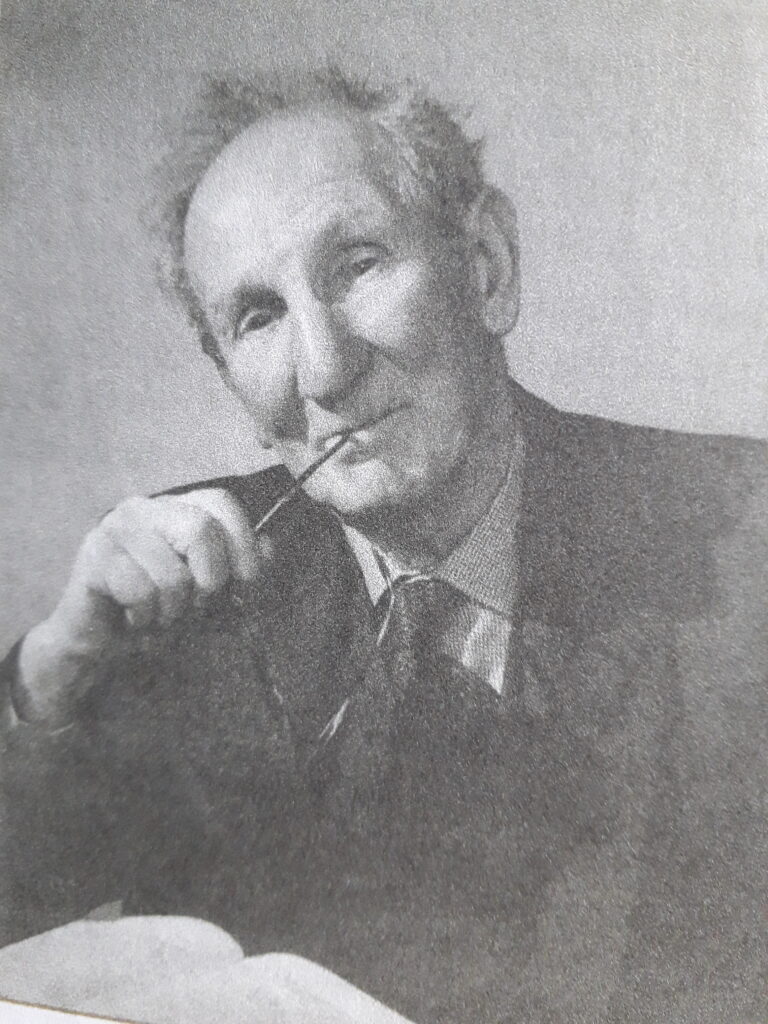
The Association for German Studies dates back to 1932, when ‘The Conference of Teachers of German in the Universities and University Colleges of Great Britain and Ireland’ met for the first time at the University of Oxford. A Board of Studies in Germanic Languages and Literatures had been established at the University of London in 1922, but German had been taught at UK and Irish universities beyond London and Oxbridge for more than a century, the oldest chair of German having been founded at Trinity College Dublin in 1776. CUTG membership was then open to ‘All teachers of German at a university or university college, being full-time members of staff,’ and discussion centred initially around the German curriculum. The outbreak of the Second World War meant that conferences ceased between 1940 and 1944. The 1930s and 40s saw the emergence of an influential generation of UK Germanists including Edna Purdie, Frederick Norman (first Secretary of the CUTG), Elizabeth Mary Wilkinson and Leonard Ashley Willoughby (instigator of the journal German Life and Letters and of the London Institute of Germanic Studies). Willoughby was the fourth Chair of CUTG, spanning the years 1939-1947, and was instrumental in restoring contact with German Germanistik soon after the War.
Since those early years the organisation has gradually transformed to reflect wider social and institutional changes. After the foundation of UK Women in German Studies (WIGS) in 1988 there was growing awareness of the need to be more inclusive, more representative, and more supportive of postgraduate and early career researchers. With increased pressure on the discipline and competition for funding, it was also important to work more closely with professional associations in other languages, and with the University Council for Modern Languages (UCML). As part of the organisation’s more outward-looking profile, the name was changed to the Association for German Studies (AGS) in 2008, there was a new website and logo and a German Studies blog. Recollections of recent Presidents reflect the increasingly proactive nature of the role, given the need to campaign for Modern Languages in the University sector, but also the excitement and interdisciplinary vigour of German Studies research as AGS enters its tenth decade.
Prof Margaret Littler, July 2023